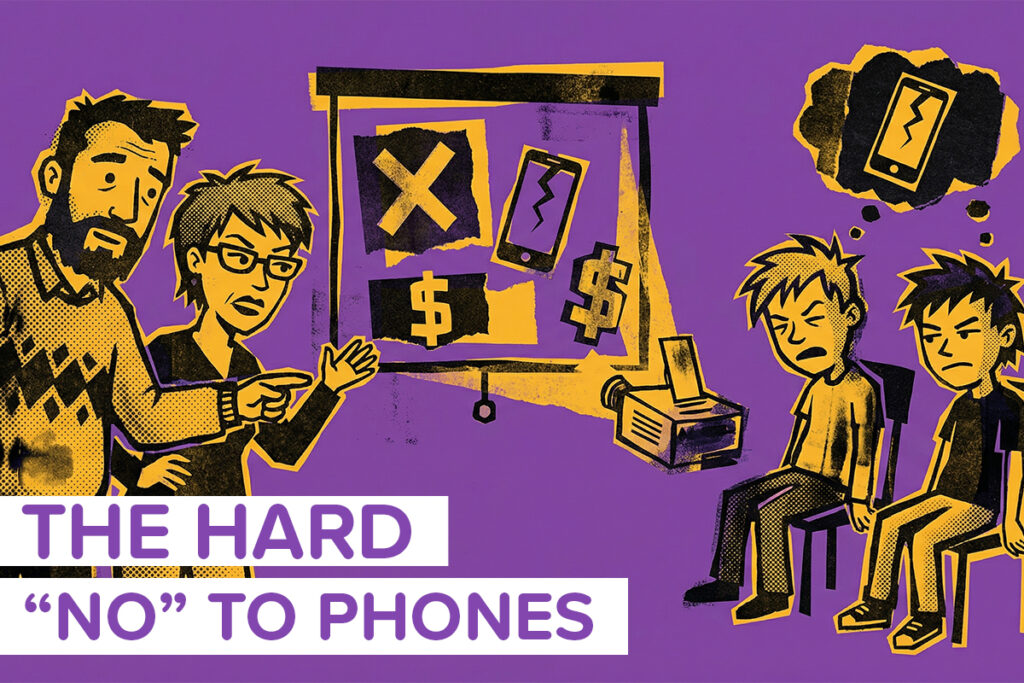
It’s here. The day you’ve been dreading since you read about it on your own phone while you were doomscrolling before you went to sleep a while back. That dreaded question you knew was coming, but you always thought you had more time. Your child has asked for a phone.
It happens somewhere between the third grade science fair and the first time they ask to go to the mall alone. Your sweet, innocent child, who can do no wrong, and is somehow better than every other kid, looks you dead in the eye and wants you to hand them a useful tool that also might be dangerous for their developing mind and sense of self worth.
“I. Want. A. Phone.”
It might be easy to just brush it off, but no, not your precious little snowflake. They’ve decided to pull on your heart strings. “Everyone else has one.”
Having a phone to a kid isn’t just about what it does, but what it represents: fitting in, or, not being left out. Suddenly, you’re in the throes of wanting to keep them safe but wanting them to always feel included. What do you do? Panic?
No.
Hold steady. You know it in your heart and you have the added benefit of having science seemingly on your side. There is a middle ground.
The Stakes
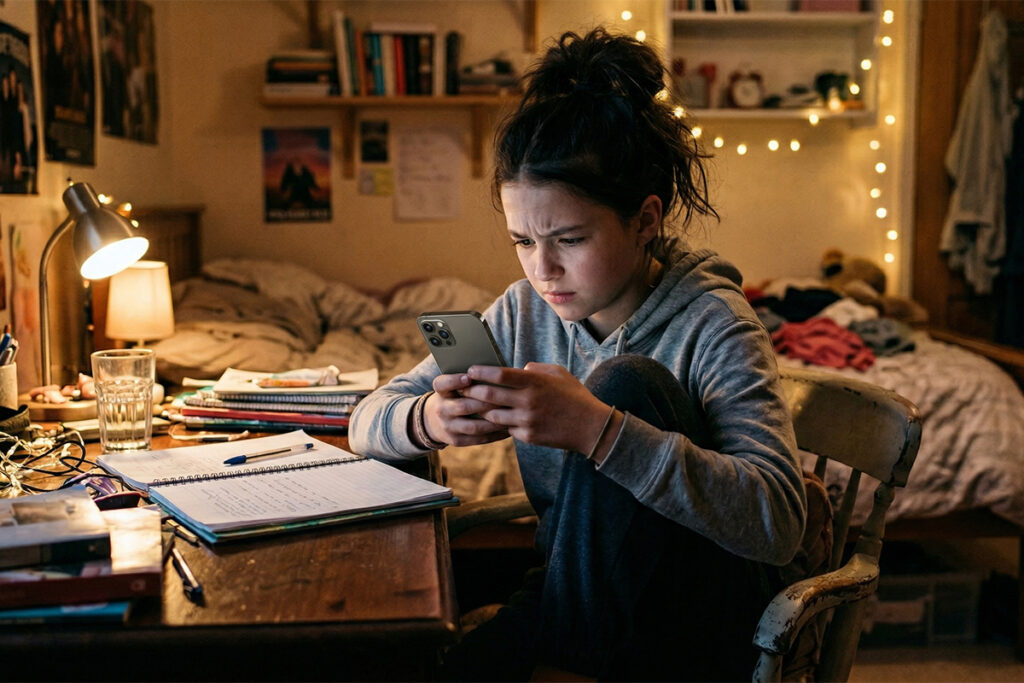
When your child asks for a phone, they aren’t actually asking for a way to check their stock portfolio or a place to put their digital concert tickets. They’re asking for connection. In their world, a phone is a ticket to group chats, inside jokes, and games during long drives.
As parents, our instinct is to protect. We know that handing a smartphone to a ten-year-old isn’t a good idea, but what are we supposed to do? Tell our perfect little angel “no?”
Well, yeah — that’s kind of our job.
The internet is an amazing place and amazing resource, and we don’t think abstinence is right in this current digital landscape, not by a long shot. But, we also know our kids’ brains are either running on fumes from everything they’ve got in their schedules, or still running on pure childhood imagination, and they aren’t wired to handle the unfiltered side of the world wide web (remember when we used to call it that?) just yet.
So let’s talk about the next best things.
Why The “Wait Until 8th” Movement Is Gaining Steam
Childhood is short. As we age, and as our kids age, this becomes more and more apparent. Not a day goes by that I don’t look at my 13-year-old and 10-year-old and not feel in my bones that I want time to just stop for a while. We understand that here at myFirst.
If you haven’t heard of the “Wait Until 8th” movement, essentially it calls for waiting to give smartphones to kids until 8th grade — or that equivalent around the globe. Yeah, kids are different and are always a case-by-case situation, but as far as blanket rules go, it’s not a terrible one. And at its core, it’s not anti-tech, it’s pro-development.
Look, if they were just fully leaving out cookies for Santa in the past few years, they’re probably not ready to fight with strangers on the internet about The Last Jedi being awesome. And delaying a smartphone doesn’t mean that it’s off the table for good. It’s making sure that kids can still be kids for as long as possible before they’re weighed down by all the baggage that comes with a smartphone.
It allows their brains to develop a little while longer.
Remember: boredom is a good thing. Not being reachable by friends all the time is a good thing. And, of course, not interacting with internet strangers is, in their own words, “fire.”
What Are They Actually Asking For?

To properly respond to this soul-crushing request, you have to understand the “why.” Usually, the request for a phone boils down to three things:
- “I want to talk to my friends” (Social Inclusion)
- “I want to take photos” (Self-Expression) or,
- “I want to do things without you” (Autonomy)
The secret? You can give them all three of those things and it doesn’t require a thousand dollar slab of glass they’re going to forget to charge when it matters.
Smart Alternatives To Smartphones
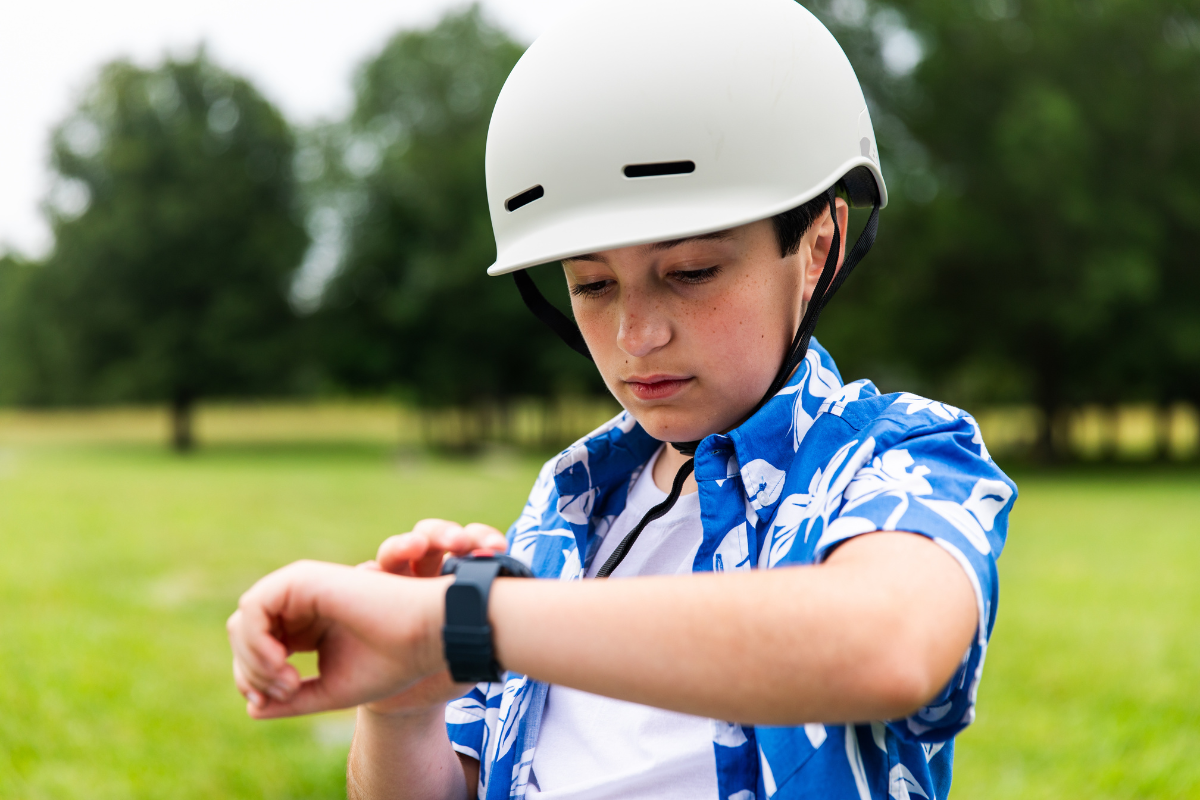
This is where the myFirst safe tech ecosystem comes in. Think of it as training wheels for the digital age.
- The 4G Watch: A smartwatch like the myFirst Fone S4 or R2 gives them the autonomy they crave. They can call you (video or audio), they can text their friends, and they can track their steps. But it doesn’t have a web browser. It doesn’t have TikTok. It has GPS for your peace of mind and modes to stay silent during school.
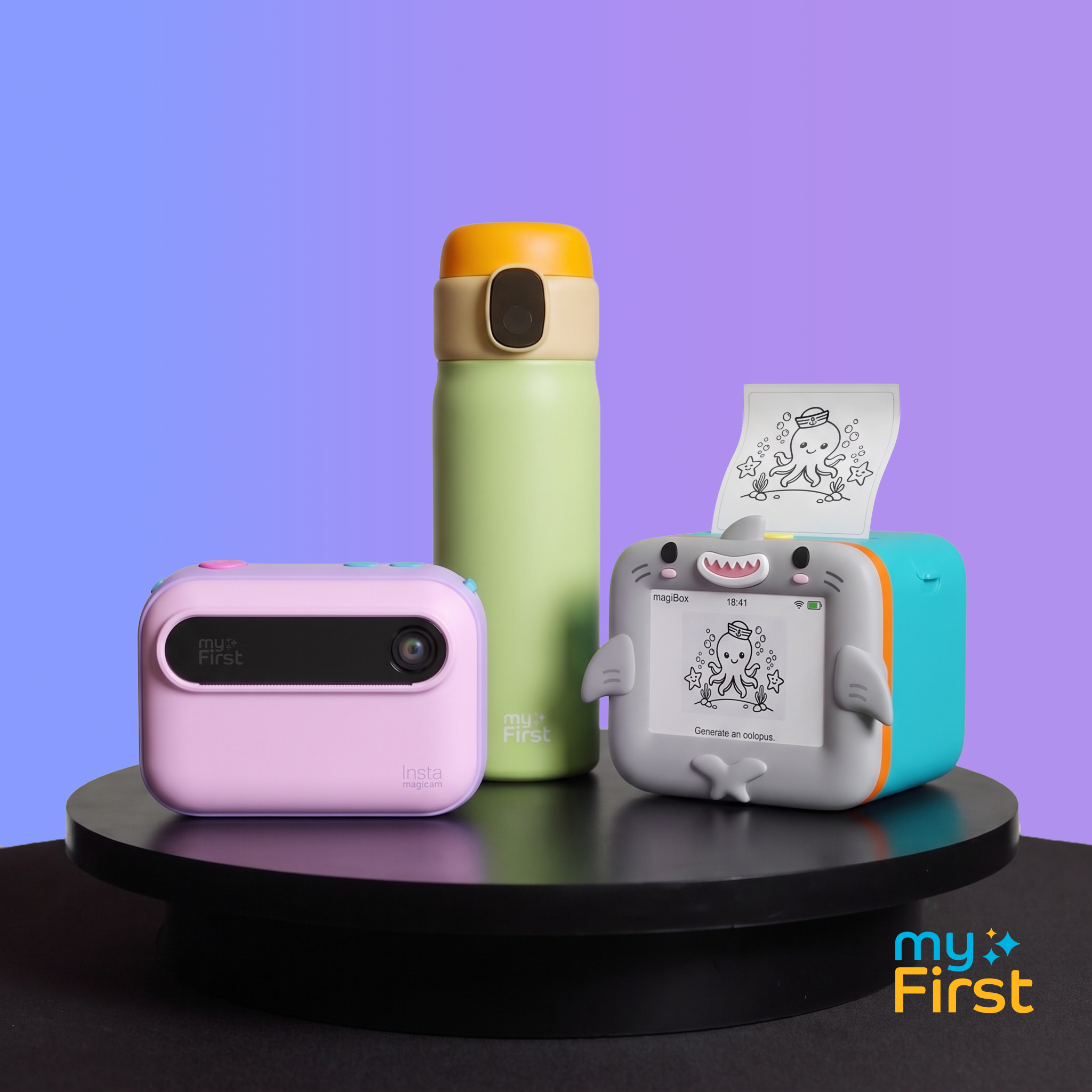
- The Smart Camera: If your kid wants a phone “to take pictures,” give them a camera designed for their hands. Let them document their world from their POV. Our Insta Lux is an instant print camera that our teens can’t seem to get enough of.
- The Safe Social Circle: Use apps designed for kids, like myFirst Circle. It’s a walled garden where the only people they can interact with are the people you approve of. It’s social with a safety net. It’s a toe-dip into the shallow end, not a cannonball above the Mariana Trench.
Quid Pro Quo
When you finally decide to introduce a device, don’t just hand it over. Make it a deal.
Some people call this a “tech contract,” we call it a way to reframe “rules” into “responsibilities.” Either way, giving kids healthy responsibilities is always a good thing. Have your kids agree to things like:
- “I will only talk to people I know in real life.”
- “The device stays in the kitchen charger at 8:00 PM.”
- “If I see something weird, I’ll tell an adult (without getting in trouble).”
This builds trust. It proves that they can handle the utility of tech before they have to face the vulnerability of the internet.
Anecdotally, my wife and I have had our kids follow the device charging outside of the bedroom rule for years now, and, I have to say — our kids sleep better and longer because of it.
Don’t Fast-Forward Childhood

I have a friend that consistently will enjoy the pilot episode of a show, then immediately look up where that story is going on Wikipedia. While it works for him, I’m sure there’s a twinge of regret as he reaches milestones in the storytelling, even if he’ll never admit it.
Not one parent I’ve met has disagreed with me when I lament that my kids are growing too fast.
When they ask for a phone, it doesn’t have to be an argument, or end in tears. Talk with your kids. Tell them why you’ve come to your decision, and explore the consensus on it together. It doesn’t have to be a “no,” but rather a “not yet,” and you’ve got a compromise waiting in the shadows ready to deploy.
By choosing intentional, kid-first technology, you’re giving your kids the tools to grow without forcing them to grow up too fast. Let them be kids. Let them take blurry photos of their dog. Let them call you from the park on their watch to say they’re staying ten minutes later.
Because once the smartphone door opens, it stays open. There’s no rush to walk through it.
Key Takeaways
- myFirst is an expert when it comes to parenting, technology, and how kids spend time in the digital world safely
- Saying “no” to your child when they ask for a smartphone before they’re ready is something you need to prepare for
- Consider the “Wait Until 8th” as guidance — no smartphones until 8th grade
- There are many reasons why kids want a smartphone, including social inclusion, self expression, and independence
- Kids should be comfortable being kids for as long as possible
- Set clear rules and responsibilities when they do get a smartphone or device, and structure it like a deal where both sides benefit, like no devices in the bedroom at bed time
- Offer safe alternatives like a 4G smart watch that can make calls and texts, instant print cameras, and guided social experiences like myFirst Circle
Want to take a deep dive into how a tech dad sees social media bans? Read our Director of Content’s latest article on Medium for more.