I don’t know about you, but if I tried to implement a no-tech policy with my kids in 2026, they’d stop fighting (for once) and team up to make a black-market mesh network running out of a hollowed-out Lego set before lunch. We live in a world where refrigerators have touchscreens and AirTags are on everything, including our dog. Technology isn’t just a part of our household; it is our household.
At myFirst, we don’t believe in slamming the digital door shut. We believe in guided exploration. It’s the difference between tossing a kid into the middle of the ocean and then teaching them how to swim, versus taking them to the local pool and working together in the shallow end.
Tech isn’t going anywhere; it’s actually going to be everywhere. It can’t be all tech all the time; we need to teach our kids healthy boundaries, how to treat devices as tools, and instill in them the ideal of balance.
Here is how to set digital boundaries that actually stick, without turning your home into a high-security prison.
1. Turn Screen Time into Screen Type
In the early 2020s, we were obsessed with the clock. They got an hour, and then it was time to turn it off. But in 2026, we know that not all minutes are created equal.
There is a massive difference between passive consumption (zoning out) and active creation (using a tablet to learn guitar chords, edit a family vacation video, or learn the basics of Python).
The Tool vs. Toy Framework
Start framing tech as a tool first and a toy second.
- The Tool: Using an AR app to design their next bedroom refresh.
- The Toy: Leveling up in Fortnite or however the heck it works.
Both have their place! But when we treat tech as a tool that supports real-world endeavors, kids stop seeing it as a magic dopamine machine and start seeing it as a way to enhance their actual interests.
2. Digital Contracts
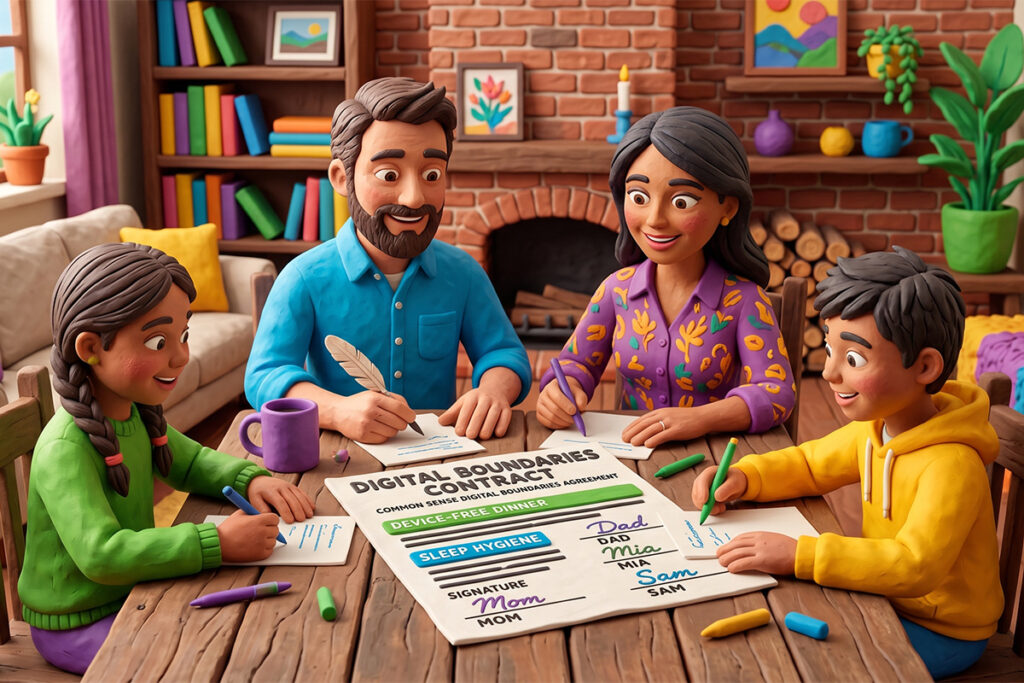
If you want a kid to respect a boundary, they need to feel like they helped build the fence. Enter the FDC, or the Family Digital Contract. This isn’t an EULA that nobody reads; it’s a living document that connects digital privileges to real-world responsibilities.
But for something like this to work, one or both sides need to actually uphold it. Otherwise, it’ll be a lawless land, and we can all just ignore congressional subpoenas (right?).
What a 2026 Digital Contract Looks Like:
- Morning routine finished > 20 minutes of Fortnite or no morning tech for a day.
- Physical activity / Going Outside For Vitamin D > Reruns of Battlestar Galactica in the evening or early bedtime
- Tech-free dinner > The mall with friends on the weekend, or it becomes a tech-free weekend
Pro Tip: Include yourself in the contract. If you pull out a phone at the dinner table, the kids get to pick the music in the car for a week. Nothing builds respect faster than seeing that the rules apply to everyone.
3. Balance Is Key

Balance is the goal, but it can be a slippery word. It doesn’t mean 50% tech and 50% homemade abacus in the backyard. It means ensuring that technology doesn’t displace the fundamental pillars of childhood: sleep, movement, and face-to-face social cues.
I think it’s good form to try an analog-first rule for new skills. Want to learn to bake? Let’s use a physical cookbook and get flour on our hands first. Then, we can go to YouTube to troubleshoot why our cake looks like a deflated pancake. The tech supports the learning; it doesn’t replace the experience.
4. Dealing with AI
As we navigate 2026, your kids might start interacting more with AI companions. While these can be great for tutoring or practicing a second language, they can’t replace the messy, complicated, wonderful experience of a real-life friendship.
Plus, AI is often wrong and likes to hallucinate. We’re kind of in uncharted territory here, nobody really knows just how much we should be teaching our kids to interact with the existing LLMs out there. I think parents should be cautious.
But that’s exactly why we’re primed to help figure it out at myFirst. We have some interesting AI uses being developed that are parent- and kid-first, which we’ll talk more about soon. But all those hesitations are being considered, for sure.
So for now, encourage co-piloting. (Not Copilot, which people refuse to use, sorry, Microsoft) Sit down with them. Be a parent. Be their guide.
5. The Sunset Clause
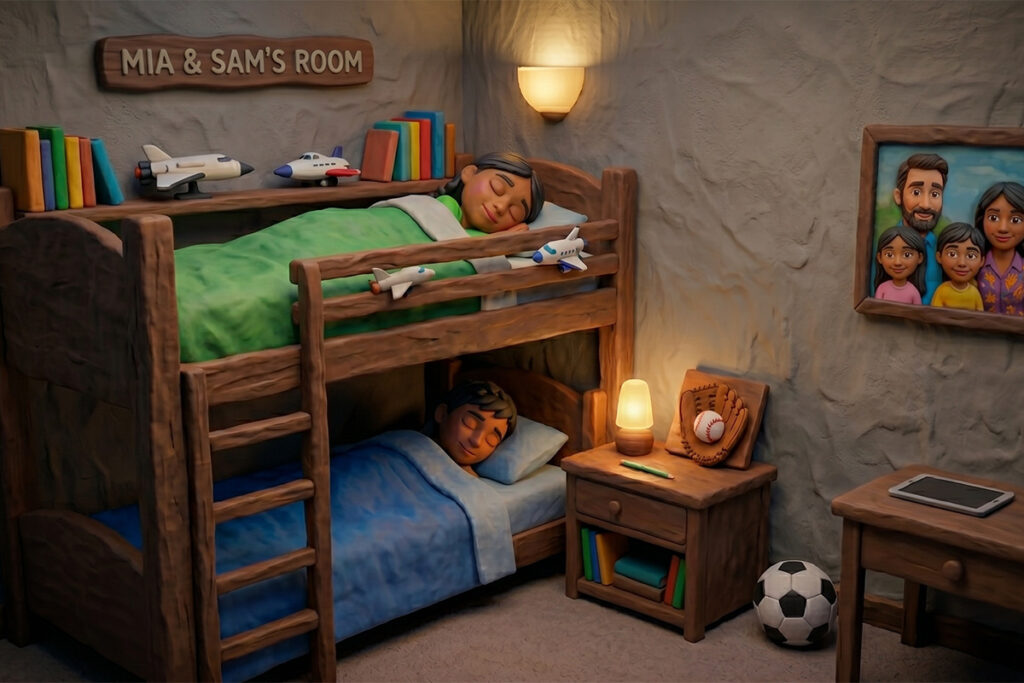
The most important boundary is the one that protects sleep. The blue light of 2026 is just as disruptive as the blue light of 2020. Quieter minds have an easier time finding rest.
- Out of Sight, Out of Mind: All devices (including yours!) go to sleep in a central location (the kitchen, the hallway) one hour before bed.
- The Bedroom Sanctuary: Keep bedrooms almost tech-free zones. A bedroom should be for dreaming, not for scrolling. Consider something like our smart home display, the Clario, to build soothing custom soundscapes and show fond family memories from across the room.
Final Thoughts: Progress, Not Perfection
You are going to have days where everyone is on a device, and everything else goes out the window because you just need twenty minutes of peace to drink a lukewarm coffee. That is okay.
Setting digital boundaries isn’t about achieving a perfect Instagram-worthy balance every day. It’s about teaching your kids that they are the masters of their tools, not the other way around. We’re raising the first generation of true digital citizens, after all.
If you’re looking for how to make them kind and capable digital citizens, check out our Digital Etiquette 101 article.