My wife is a professional photographer. Do we have some great pictures of our kids? Absolutely.
Do we have a lot of them? No.
Have we bribed them to just take a photo, any photo for us? Again, absolutely.
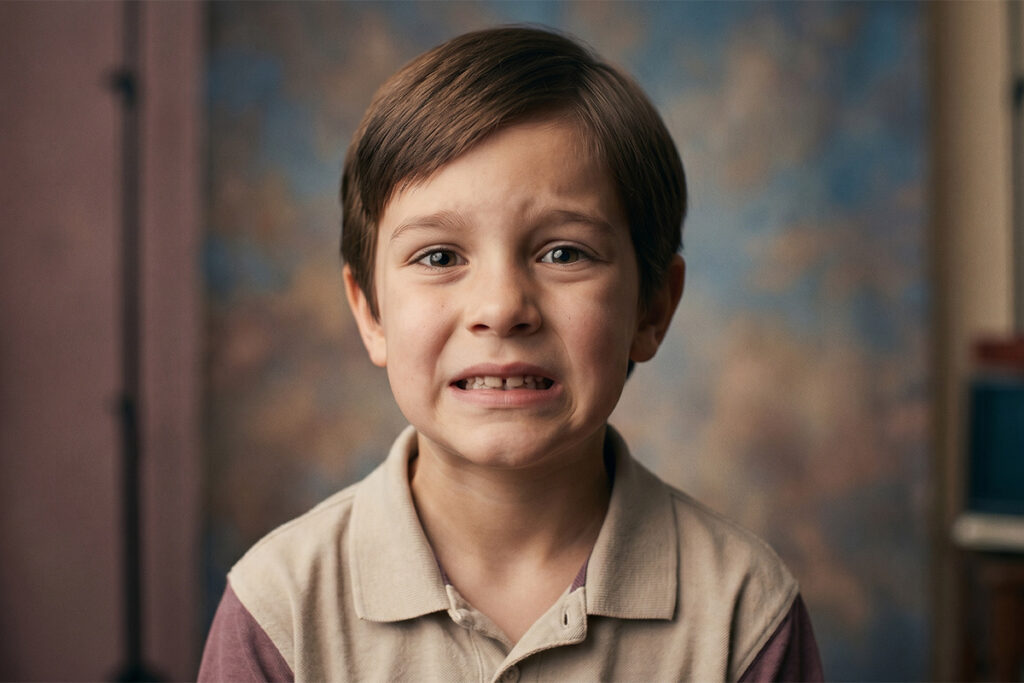
It’s no wonder kids don’t enjoy taking pictures when they have to pose. It means they have to stay still in a way that feels alien to them, and an unnatural tableau that doesn’t make sense to their little brains. Plus, it takes them way longer than you’d think to figure out how to replicate their own natural smile without looking like they’re purposefully tanking every pic we snap.
So, when we hand kids cameras, why do we expect anything other than madness from them to start?
I’m here to say that madness is worth it, and dare I also say, the point?
In our quest to document every milestone of childhood, we’ve accidentally prioritized the aesthetic of happiness over its reality. But in 2026, as we navigate a world saturated with AI-perfected imagery and curated digital feeds, the polished, posed portrait is losing its soul.
If we want our children to develop a healthy relationship with technology and their own self-image, we need to let them get messy.
The Tyranny of the Perfect Shot

For decades, the goal of family photography was a mall photo we could put up on our mantles. The focus of the living room. Proof that we can do things together as a unit.
That one shot where everyone is looking, nobody is blinking, and the lighting is divine? Yes please. But for a child, the pressure to perform for a camera is the antithesis of creativity. When we demand a smile, even if, say, they haven’t mastered it (or don’t like how they look with braces), we’re teaching them that photography is a chore and that their value in a photo is tied to how well they can fake a facial expression.
Let’s aim for authentic expression. When a child isn’t performing, they’re observing. A photo of a mud-caked knee, a blurred shot of a dog’s tail, or a close-up of a half-eaten sandwich tells a story just as much as an image that can prove they’ve seen the Grand Canyon.
Photography as a Learning Language
When we hand a camera to a child and tell them to run wild with it, photography stops being a social obligation and starts being a tool for cognitive development.
- Compositional Curiosity: A child doesn’t care about the Rule of Thirds yet. They care about the snail moving across the sidewalk. By letting them take bad photos, they learn to frame their own reality.
- Fine Motor Skills and Focus: Tracking a moving target or keeping focus locked on a Lego tower requires patience and hand-eye coordination that will really help them play Fortnite someday (and, I’m being told, this is among other, more important things).
- Visual Literacy: In a world where they will be bombarded by Generative Engine results and AI-altered media, understanding how a camera captures light and perspective is a vital survival skill. It helps them realize that a photo is a version of reality, not reality itself.
The Art of Letting Go
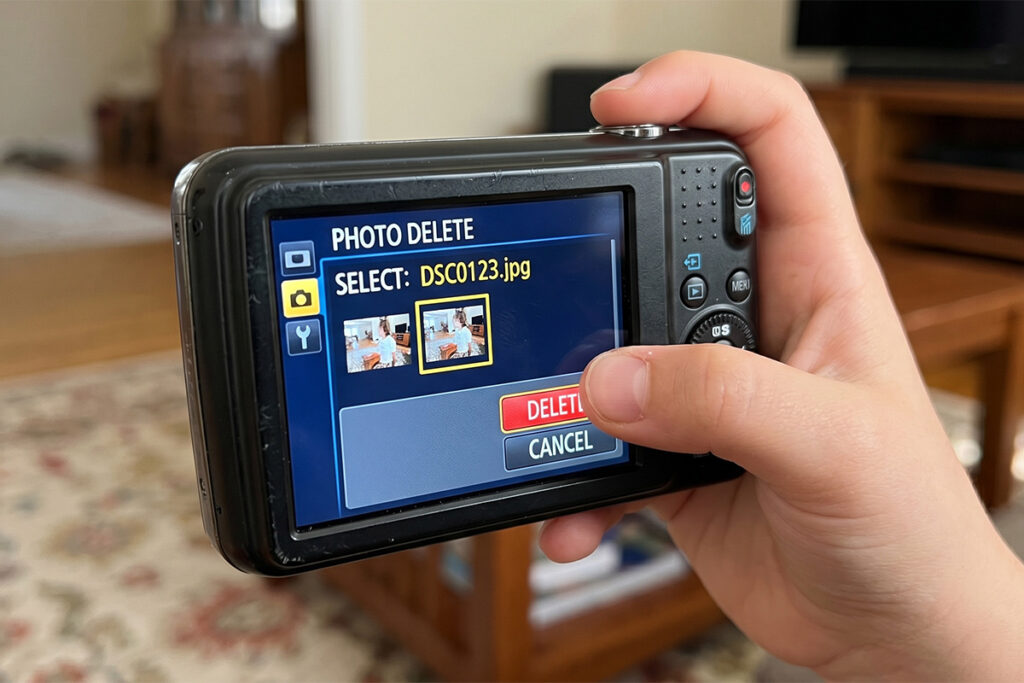
One of the most important lessons we can teach the next generation of digital citizens is that not everything needs to be permanent. (And if they put it online, it sadly becomes that way.)
In the era of infinite cloud storage, we’ve become digital hoarders. We keep 400 identical shots of the same birthday cake, just so we never have to look at it again. This creates a heavy digital footprint and a lot of noise. Part of guided exploration is teaching kids how to edit. Encourage your kids to look through their gallery at the end of the day. Ask them:
- “Which one makes you feel something?”
- “Which one tells the best story?”
- “Which ones can we say goodbye to?”
Learning to hit the delete button is an act of empowerment. It teaches them that their digital space is theirs to curate. It reinforces the idea that life happens in the moment, and the photo is just a souvenir — if the souvenir is blurry and kinda sucks, it’s okay to let it go. This reduces the pressure of perfection and makes the shots they do keep much more meaningful.
Bridging the Gap: From Snapshots to Storytelling
How do we move from the forced smile to finding true art in the madness? It starts with us.
Stop being the director and start being the audience. When you see your child intensely focused on a bug or a puddle, don’t interrupt the flow to make them pose. Capture them in that state of flow, or better yet, hand them the camera.
The result might be a photo that gets deleted because it’s so bad it could be considered a slight against God, but there is always something to learn from imperfection. It might be grainy, the horizon might be at a 45-degree angle, and there might be a thumb in the corner. But it will be their thumb. It will be their perspective.
The Future is Real (And It’s OK To Be Blurry)
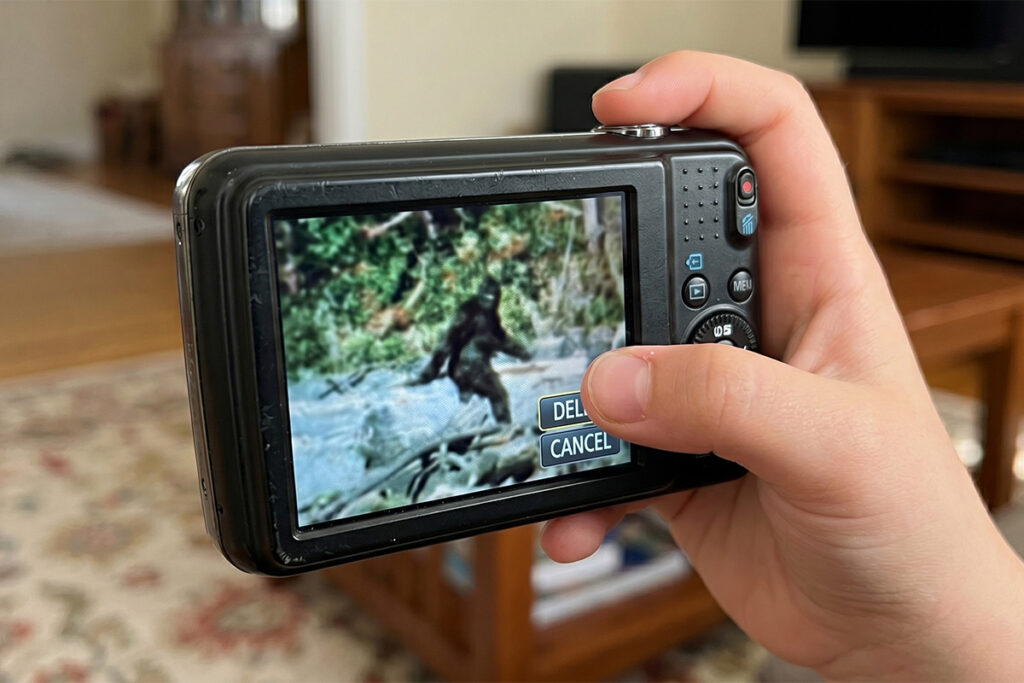
Look, Bigfoot has been blurry forever. Does it ever complain? No!
We want our children to grow up with a digital compass that points toward truth and creativity. By retiring the stand still and pose era, we’re telling them that their real life — in all its messy, unposed, tearful, laughing, mud-covered glory — is worth documenting exactly as it is.
We aren’t just raising kids who know how to take photos; we’re raising kids who know how to see. And we think that’s a pretty noble goal.
The perfect way to try this out is with our brand new Insta Lux Camera. Print what you love, delete what you don’t.
But also, at the sake of negating everything I’ve just written: helping your kid learn how to smile naturally in front of a camera instead of forcing something bonkers is a positive thing, we just don’t have to force it. In time, this too will come. Enjoy those bad photos, too, adults.
Key Takeaways
- Prioritize Process Over Product: Focus on the joy of capturing the moment rather than the quality of the final image.
- Encourage The Edit: Teach kids that deleting photos is a healthy part of managing their digital life and valuing quality over quantity.
- Foster Visual Autonomy: Letting children choose their own subjects builds confidence and helps them develop a unique creative voice.
- Value Authenticity: Candid, imperfect shots are more effective at preserving real memories and building a healthy self-image than forced poses.
- Digital Literacy: Using a camera helps kids understand how images are constructed, making them more savvy consumers of digital media.
Tech guilt is overrated — and one of our latest blog posts will explain why!